28.10.12

Félix Guattari: UNA TOMBA PER EDIPO PSICOANALISI E TRASVERSALITÀ - MIMESIS, ITA, 2012


Félix Guattari

UNA TOMBA PER EDIPO

PSICOANALISI E TRASVERSALITÀ


Guattari segna una rottura epistemologica con la psicoanalisi attaccando frontalmente il complesso di Edipo. L’inconscio non è più un teatro del desiderio familiare ma lo spazio di produzione sociale del desiderio. L’autore, attraverso uno studio approfondito delle famose pagine di Freud dedicate al complesso di Edipo, rintraccia i meccanismi sottili della prevaricazione autoritaria e gerarchica in difesa dello status quo; l’inconscio, con il padre della psicoanalisi, diventa un insieme di credenze e di rappresentazioni indotte. In questo modo il testo di Guattari affronta i limiti dei tradizionali discorsi teorici sulla psicoanalisi e propone una chiave interpretativa originale e tutt’ora ineguagliata. Il nodo principale su cui si sofferma Guattari è un modo di rileggere la schizofrenia non solo come malattia mortale, ma come tentativo disperato di comunicazione di un malessere individuale, che come tale potrebbe trasformarsi in una possibilità di accoglimento dei molteplici esseri che convivono in ognuno. Scritte nei primi anni Settanta, ben prima della attuali crisi che attraversano la psicoanalisi sia come pratica che come disciplina scientifica, le pagine di Guattari si sono dimostrate profetiche. Questo volume aiuta anche a meglio comprendere L’antiedipo, altra opera composta da Guattari assieme a Gilles Deleuze. I due testi sono forse le opere più significative dell’antipsichiatria.

Félix Guattari (1930-1992) è stato non solo filosofo, ma anche medico e psicoanalista. Aderisce alla scuola freudiana di Parigi sotto la guida di Jacques Lacan. Riconosciuto universalmente come uno dei padri dell’antipsichiatria, Guattari poté elaborare le sue teorie all’ospedale di La Borde, uno dei principali centri psichiatrici francesi che diresse fino alla prematura scomparsa. Guattari fu anche uno dei fondatori in Francia del movimento ecologista, cui contribuì sia sul versante organizzativo che teorico. Dopo il Sessantotto Guattari intraprese una attiva e straordinaria collaborazione con il grande filosofo Gilles Deleuze con il quale pubblicò opere decisive come: L’antiedipo, 1972;Kafka. Per una letteratura minore, 1975; Millepiani, 1980; Che cos’è la filosofia?,1991.

22.10.12

Deleuze and Cinema The Film Concepts - Felicity Colman - Berg Publishers, Usa, 2011


Deleuze and Cinema
The Film Concepts
Felicity Colman 


Gilles Deleuze published two radical books on film:Cinema 1: The Movement-Image and Cinema 2: The Time-Image. Engaging with a wide range of film styles, histories and theories, Deleuze's writings treat film as a new form of philosophy. This ciné-philosophy offers a startling new way of understanding the complexities of the moving image, its technical concerns and constraints as well as its psychological and political outcomes.

Deleuze and Cinema presents a step-by-step guide to the key concepts behind Deleuze's revolutionary theory of the cinema. Exploring ideas through key directors and genres, Deleuze's method is illustrated with examples drawn from American, British, continental European, Russian and Asian cinema.

Deleuze and Cinema provides the first introductory guide to Deleuze's radical methodology for screen analysis. It will be invaluable for students and teachers of Film, Media and Philosophy.

About the Author/Editor

Felicity Colman is Senior Lecturer in Film and Media Studies, Manchester Metropolitan University, UK.

Contents


Abbreviations
0. Introduction
1. Ciné-system
2. Movement
3. Frame, shot and cut
4. Montage
5. Perception
6. Affect
7. Action
8. TransSemiotics
9. Sign [vector]
10. Time
11. Politics
12. Topology
13. Thought
14. Conclusion: Ciné-ethics
Glossary of Deleuze's key cinematographic terms
Bibliography
Filmography

16.10.12

Evil Media - Matthew Fuller and Andrew Goffey - MIT Press, Usa, October 2012


Evil Media
Matthew Fuller and Andrew Goffey


Evil Media develops a philosophy of media power that extends the concept of media beyond its tried and trusted use in the games of meaning, symbolism, and truth. It addresses the gray zones in which media exist as corporate work systems, algorithms and data structures, twenty-first century self-improvement manuals, and pharmaceutical techniques. Evil Media invites the reader to explore and understand the abstract infrastructure of the present day. From search engines to flirting strategies, from the value of institutional stupidity to the malicious minutiae of databases, this book shows how the devil is in the details.

The title takes the imperative “Don’t be evil” and asks, what would be done any differently in contemporary computational and networked media were that maxim reversed.

Media here are about much more and much less than symbols, stories, information, or communication: media do things. They incite and provoke, twist and bend, leak and manage. In a series of provocative stratagems designed to be used, Evil Media sets its reader an ethical challenge: either remain a transparent intermediary in the networks and chains of communicative power or become oneself an active, transformative medium.

About the Authors

Matthew Fuller is David Gee Reader in Digital Media at the Centre for Cultural Studies at Goldsmiths College, University of London. He is the author of Behind the Blip: Essays on the Culture of Software and Media Ecologies: Materialist Energies in Art and Technoculture (MIT Press, 2005) and editor of Software Studies: A Lexicon (MIT Press, 2008).

Andrew Goffey is a Senior Lecturer in Media, Culture, and Communication at Middlesex University, London. He is the coeditor, with Éric Alliez, of The Guattari Effect and the translator of Isabelle Stengers and Philippe Pignarre's Capitalist Sorcery, of Félix Guattari's Schizoanalytic Cartographies, and of work by Maurizio Lazzarato, Barbara Cassin, and Etienne Balibar. He is also coeditor of the journal Computational Culture.


Read more on MIT website

15.10.12

Digital Contagions A Media Archaeology of Computer Viruses - Jussi Parikka - Peter Lang Publishing, Uk, 2007


Digital Contagions is the first book to offer a comprehensive and critical analysis of the culture and history of the computer virus phenomenon. The book maps the anomalies of network culture from the angles of security concerns, the biopolitics of digital systems, and the aspirations for artificial life in software. The genealogy of network culture is approached from the standpoint of accidents that are endemic to the digital media ecology. Viruses, worms, and other software objects are not, then, seen merely from the perspective of anti-virus research or practical security concerns, but as cultural and historical expressions that traverse a non-linear field from fiction to technical media, from net art to politics of software. Jussi Parikka mobilizes an extensive array of source materials and intertwines them with an inventive new materialist cultural analysis. Digital Contagionsdraws from the cultural theories of Gilles Deleuze and Félix Guattari, Friedrich Kittler, and Paul Virilio, among others, and offers novel insights into historical media analysis.

Jussi Parikka is Reader in Media & Design at Winchester School of Art (University of Southampton). He is the author of Insect Media (2010) and co-editor of The Spam Book (2009) and Media Archaeology (2011). Parikka's homepage is http://www.jussiparikka.net.

«Inspired by the work of Paul Virilio, Friedrich Kittler, and Gilles Deleuze, this book chronicles the contemporary digital landscape through the menagerie of email worms and computer viruses that infect and define it. A self-described media archeologist, Jussi Parikka is both theoretically nuanced and technically detailed, a welcome relief coming on the heels of dotcom hysteria over digital hygiene. The result is a becoming-viral of today's technological culture. It is essential reading for anyone infected by the digital contagion.» 
(Alexander R. Galloway, Assistant Professor, Department of Culture and Communication, New York University; Author of 'Protocol and Gaming')
«'Digital Contagions' is the first book to look at the computer virus as a historical and cultural phenomenon, rather than simply as a technological issue. It brilliantly recounts the history of the emergence of such viruses in the context of other epidemics, and how these different kinds of contagions are ineluctably bound together in our technologized, digital culture. The book is an essential text for helping us come to terms with the massive changes this emerging culture is bringing about.» 

(Charlie Gere, Reader in New Media Research, Lancaster University; Author of 'Digital Culture' and 'Art, Time and Technology')

Read more on PLP website

14.10.12

Erarta Galleries Presents Revision DNA By Andrey Gorbunov @ London, Berkeley Square - 9 October to 17 November 2012


Erarta Galleries London is delighted to present Revision DNA by Andrey Gorbunov. Marking a break with his earlier more painterly approach to image making, Gorbunov’s new work questions the relationship that links art and science and our lives with technology,  asking if it is possible to assume that we are dealing with two opposing factors. On the one hand, the positive and confirmed structure of scientific knowledge and the ordered binary coding of the internet, and, on the other, the intuitive nature of art produced by the irrationality of biological man. Where science is to be considered the product of pure rationalism, the result of procedures amply verified, the search for unequivocal truths, certain and impossible to confute, Gorbunov asks if this rationalism translates to the virtual world of the Internet? Are our verifiable virtual constructs of self more real than our physical bodily being, and should the Internet be evaluated as a product of mathematics and science or as an organism growing and evolving under its own initiative?
Observing the monumental canvases of Gorbunov we can immediately and easily understand his vision of contemporary life and culture. The virtual world has become an integral part of each of us, similar to a new dimension influencing our social and biological rhythms. It is impossible to imagine the world without computer technologies today; everyday we immerse ourselves more and more deeply as network chats supersede actual human interaction and our Facebook and Twitter profiles grow. Not only have our moods, but also our lives, started to depend on the number of comments and “likes” our virtual egos successfully amass. Thus, contemporary culture is not a culture divided between ‘ars’ and ‘scientia’, or life and technology, but rather it is conflated into a ‘technoculture’ – a hybrid where diversity and quantity prevails over genuine identity. Gorbunov adopts a focused vision of the relationship between art and science, life and virtual life: No longer are we dealing with opposites in a dialectical vision, a view which appears more than ever superseded, but with complementary, interacting and intersecting aspects of a futuristic civilisation.
The Virus paintings that make up the exhibition Revision DNA draw a parallel between biological and computer viruses, and Gorbunov highlights the similarities between man and the internet, both living entities that grow and change daily, and both vulnerable to infections. Scanning the QR codes in the paintings will reveal information about notorious computer viruses, but all computer specific terms have been removed – the affect of these viruses is human. Ironically, QR codes may become the malicious points of infection for future viruses, as reading the codes puts the privacy of the user at risk by “attagging” the identity of user. Though science has recognised the truths of nature, it had abstained from modifying them for instrumental aims, but in contemporary technoculture, in genetic engineering and biotechnologies, the object of scientific research is no longer sacred and untouchable, the essence of truth, but an object that can be manipulated and transformed, by means of experimentation by those studying it. Similarly, in the macrocosm of the Internet, and our engagement with it and use of it, Gorbunov questions the balance of power – who is using whom and to what end?

Contact: Beth Morrow Tel: +44 (0) 20 7499 7861
E-mail: beth@erartagalleries.com

Andrey Gorbunov
Andrey Gorbunov is a graduate of the Nizhniy Novgorod Art College and St. Petersburg’s esteemed Mukhina Art Academy, where he now teaches in the monumental and decorative painting departments. Gorbunov has exhibited extensively throughout Russia and his paintings can be found in private collections in Russia, the UK and the USA.
Erarta Galleries: London | New York | Zurich | St Petersburg
8 Berkeley Street, London W1J 8DN.

Golsmiths Event: Virality and Evil Media presentations @ London, Goldsmiths, 22nd October 2012


If you're in London in October you may be interested in this event at Goldsmiths to mark the release of Evil Media, Virality and the next issue of Computational Culture. 
It's the first of a number of events related to Virality I'll be posting about. Computational Culture, Issue Two, Virality, Contagion Theory in the Age of Networks, by Tony D. Sampson Evil Media, by Matthew Fuller & Andrew Goffey 

22nd October 6pm Room RHB 342 Goldsmiths New Cross (Free, all welcome!) 

To celebrate these publications, informal presentations will be made by the authors of Virality and Evil Media and contributors to Computational Culture. 'Computational Culture' is an online open-access peer-reviewed journal of inter-disciplinary enquiry into the nature of cultural computational objects, practices, processes and structures. The new issue presents articles by Carlos Barreneche, Jennifer Gabrys, Robert W. Gehl & Sarah Bell, Shintaro Miyazaki, Bernhard Rieder, Bernard Stiegler, Annette Vee and reviews by Chiara Bernardi, KevinHamilton, Boris Ružiæ, Felix Stalder and an anonymous contributor. In 'Virality' Tony D. Sampson presents a contagion theory fit for the age of networks. Unlike memes and microbial contagions, Virality does not restrict itself to biological analogies and medical metaphors. It instead points toward a theory of contagious assemblages, events, and affects. For Sampson, contagion is not necessarily a positive or negative force of encounter; it is how society comes together and relates. [University of Minnesota Press] 'Evil Media' invites the reader to explore and understand the abstract infrastructure of the present day. From search engines to flirting strategies, from the value of institutional stupidity to the malicious minutiae of databases, this book shows how the devil is in the details. The title takes the imperative “Don’t be evil” and asks, what would be done any differently in contemporary computational and networked media were that maxim reversed. [The MIT Press] In 'Sensing an Experimental Forest', her article for 'Computational Culture' 2, Jennifer Gabrys discusses fieldwork conducted at an environmental sensor test site, the James Reserve in California. The use of wireless sensor networks to study environmental phenomena is an increasingly prevalent practice, and ecological applications of sensors have been central to the development of wireless sensor networks that now extend to numerous ‘participatory’ applications. 

Virality http://www.upress.umn.edu/book-division/books/virality 
Evil Media http://mitpress.mit.edu/catalog/item/default.asp?ttype=2&tid=12995 Computational Culture http://www.computationalculture.net/

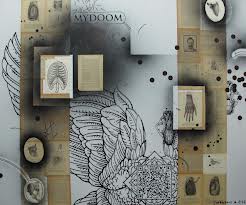
pic: Andrey Gorbunov - Virus No.1 - Mixed Media

13.10.12

Michael Riedel's “Texte zur Kunst” @ the Schirn Kunsthalle in Frankfurt


Following his first retrospective “Texte zur Kunst” at the Schirn Kunsthalle in Frankfurt, Michael Riedel will be reading from the exhibiton catalogue on Friday, September 28th. The reading will take place in the studio of the design agency Double Standards, who also created the layout for the book. After the talk, a book signing will round-off the event.
Frankfurt-based artist Michael Riedel has been investigating the issue of reproduction and repetition, working with recorded conversations, films and performances, and with the exhibitions of other artists’ works. His creative method is based on the combination of these elements into ever new variations and on the transformation of one medium into another. 


Read more on Gestalten website