Showing posts with label Virality. Show all posts
5.10.17
30.10.13
28.10.13
Tony Sampson @ Royal College of Art - 30th Oct, 2013
Academic and writer Tony D. Sampson will host a workshop on Viral Networks at the Royal College of Art, in the Hockney Gallery, on Wednesday morning at 10am. Don't miss out! More information here: viralcontagion.wordpress.com
7.11.12
4.11.12
MUTE ISSUE LAUNCH AND PARTY FRIDAY 16 NOVEMBER! - Viral Utopias November 16th – 7PM til 1AM @ Limehouse Town Hall, London, Uk
Viral Utopias November 16th – 7PM til 1AM @ Limehouse Town Hall, London
Panics, plagues, and politics. Countless times the death of politics, utopia and neoliberalism has been proclaimed... and just as many times the lumbering remains of our conceptual apparatuses dust themselves and trundle on again... mutating their movements in unfolding recombinatory patterns.
Come join us to celebrate the release of several new publications exploring this overlap between the utopian and the viral, the networked and the not-worked: Virality: Contagion Theory in the Age of Networks by Tony Sampson; Contract & Contagion: From Biopolitics to Oikonomia by Angela Mitropoulos; Open Utopia by Thomas More & Stephen Duncombe; and the current issue of Mute Magazine, ‘Becoming Impersonal’ Vol.3 #3.
DJS Agit Disco DJs http://www.metamute.org/shop/mute-books/agit-disco
LIVE BANDS Traum - London-based chanson for lovers of neo-romantisch perverse pop http://soundcloud.com/traumatica/whatsmyjob Hungry Hearts - whisky filled gruff folk punk: http://www.myspace.com/thehungryhearts
VENUE Limehouse Town Hall 646 Commercial Road London E14 7HA RSVP ESSENTIAL http://www.eventbrite.com/event/4688544563
ABOUT THE PUBLICATIONS
Virality: Contagion Theory in the Age of Networks - Tony Sampson http://www.upress.umn.edu/book-division/books/virality
Contract & Contagion: From Biopolitics to Oikonomia - Angela Mitropoulos http://www.minorcompositions.info/?p=482
Open Utopia - Thomas More & Steve Duncombe http://theopenutopia.org/ Mute, ‘Becoming Impersonal’, Vol.3 #3 http://linkme2.net/sx
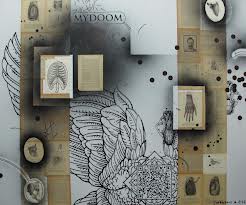
Pic: Rinat Voligamsi's Light (Painting, 2012)
Read more on Mute Mag website
15.10.12
Digital Contagions A Media Archaeology of Computer Viruses - Jussi Parikka - Peter Lang Publishing, Uk, 2007
Digital Contagions is the first book to offer a comprehensive and critical analysis of the culture and history of the computer virus phenomenon. The book maps the anomalies of network culture from the angles of security concerns, the biopolitics of digital systems, and the aspirations for artificial life in software. The genealogy of network culture is approached from the standpoint of accidents that are endemic to the digital media ecology. Viruses, worms, and other software objects are not, then, seen merely from the perspective of anti-virus research or practical security concerns, but as cultural and historical expressions that traverse a non-linear field from fiction to technical media, from net art to politics of software. Jussi Parikka mobilizes an extensive array of source materials and intertwines them with an inventive new materialist cultural analysis. Digital Contagionsdraws from the cultural theories of Gilles Deleuze and Félix Guattari, Friedrich Kittler, and Paul Virilio, among others, and offers novel insights into historical media analysis.
Jussi Parikka is Reader in Media & Design at Winchester School of Art (University of Southampton). He is the author of Insect Media (2010) and co-editor of The Spam Book (2009) and Media Archaeology (2011). Parikka's homepage is http://www.jussiparikka.net.
«Inspired by the work of Paul Virilio, Friedrich Kittler, and Gilles Deleuze, this book chronicles the contemporary digital landscape through the menagerie of email worms and computer viruses that infect and define it. A self-described media archeologist, Jussi Parikka is both theoretically nuanced and technically detailed, a welcome relief coming on the heels of dotcom hysteria over digital hygiene. The result is a becoming-viral of today's technological culture. It is essential reading for anyone infected by the digital contagion.»
(Alexander R. Galloway, Assistant Professor, Department of Culture and Communication, New York University; Author of 'Protocol and Gaming')
«'Digital Contagions' is the first book to look at the computer virus as a historical and cultural phenomenon, rather than simply as a technological issue. It brilliantly recounts the history of the emergence of such viruses in the context of other epidemics, and how these different kinds of contagions are ineluctably bound together in our technologized, digital culture. The book is an essential text for helping us come to terms with the massive changes this emerging culture is bringing about.»
(Charlie Gere, Reader in New Media Research, Lancaster University; Author of 'Digital Culture' and 'Art, Time and Technology')
Read more on PLP website
14.10.12
Golsmiths Event: Virality and Evil Media presentations @ London, Goldsmiths, 22nd October 2012
If you're in London in October you may be interested in this event at Goldsmiths to mark the release of Evil Media, Virality and the next issue of Computational Culture.
It's the first of a number of events related to Virality I'll be posting about. Computational Culture, Issue Two, Virality, Contagion Theory in the Age of Networks, by Tony D. Sampson Evil Media, by Matthew Fuller & Andrew Goffey
22nd October 6pm Room RHB 342 Goldsmiths New Cross (Free, all welcome!)
To celebrate these publications, informal presentations will be made by the authors of Virality and Evil Media and contributors to Computational Culture. 'Computational Culture' is an online open-access peer-reviewed journal of inter-disciplinary enquiry into the nature of cultural computational objects, practices, processes and structures. The new issue presents articles by Carlos Barreneche, Jennifer Gabrys, Robert W. Gehl & Sarah Bell, Shintaro Miyazaki, Bernhard Rieder, Bernard Stiegler, Annette Vee and reviews by Chiara Bernardi, KevinHamilton, Boris Ružiæ, Felix Stalder and an anonymous contributor. In 'Virality' Tony D. Sampson presents a contagion theory fit for the age of networks. Unlike memes and microbial contagions, Virality does not restrict itself to biological analogies and medical metaphors. It instead points toward a theory of contagious assemblages, events, and affects. For Sampson, contagion is not necessarily a positive or negative force of encounter; it is how society comes together and relates. [University of Minnesota Press] 'Evil Media' invites the reader to explore and understand the abstract infrastructure of the present day. From search engines to flirting strategies, from the value of institutional stupidity to the malicious minutiae of databases, this book shows how the devil is in the details. The title takes the imperative “Don’t be evil” and asks, what would be done any differently in contemporary computational and networked media were that maxim reversed. [The MIT Press] In 'Sensing an Experimental Forest', her article for 'Computational Culture' 2, Jennifer Gabrys discusses fieldwork conducted at an environmental sensor test site, the James Reserve in California. The use of wireless sensor networks to study environmental phenomena is an increasingly prevalent practice, and ecological applications of sensors have been central to the development of wireless sensor networks that now extend to numerous ‘participatory’ applications.
Virality http://www.upress.umn.edu/book-division/books/virality
Evil Media http://mitpress.mit.edu/catalog/item/default.asp?ttype=2&tid=12995 Computational Culture http://www.computationalculture.net/
pic: Andrey Gorbunov - Virus No.1 - Mixed Media
6.10.12
25.4.12
Julio Varela - Vortex to Virus, Myth to Meme: The Literary Evolution of Nihilism and Chaos in Modernism and Postmodernism - VDM Verlag, 2009
The emergence of nihilism and chaos in the nineteenth and twentieth centuries offers us a case study in how memes work. Memes are bundles of cultural information that display viral properties, sowing the seeds of reality in the individual minds that make up a culture, sub-culture, or counterculture. In the case of nihilism and chaos, the ongoing epistemological and ontological revolution initiated by the likes of Schopenhauer and Nietzsche, the collapse of myth as a totalizing source of meaning, and the transition from a Newtonian, deterministic worldview to a quantum-relativistic, chaotic worldview transformed the Western cultural landscape, paving the way for the viral spread of nihilism and chaos to different intellectual and cultural strata. This book provides a framework for understanding how memes work in general and then explores the cultural spread of nihilism and chaos in the nineteenth and twentieth centuries. Joyce's Ulysses, Beckett's trilogy, and Pynchon's Gravity Rainbow serve as focal points in this study because each work represents a critical juncture in the memetic evolution of nihilism and chaos during the modernist and postmodernist periods.
Julio Armando Varela was born in Miami, Florida. He received his Master of Arts degree in the Program in the Humanities at Florida State University in 1993 and received his Doctorate of Philosophy from the Program in the Humanities at Florida State University in 2004. He lives and teaches humanities and literature in Miami.
Virality : contagion theory in the age of networks by Tony D. Sampson - University of Minnesota Press, Usa, August 2012
A new theory of viral relationality beyond the biological
In this thought-provoking work, Tony D. Sampson presents a contagion theory fit for the age of networks. Unlike memes and microbial contagions, Virality does not limit itself to biological analogies and medical metaphors. It instead points toward a theory of contagious assemblages, events, and affects. For Sampson, contagion is not necessarily a positive or negative force of encounter; it is the way society comes together and relates.
Sampson argues that a biological understanding of contagion has been universally distributed by way of the rhetoric of fear used in the antivirus industry and other popular discourses surrounding network culture. This understanding is also detectable in concerns over too much connectivity, including problems of global financial crisis and terrorism. Sampson’s “virality” is as universal as that of the biological meme and microbe, but is not understood through representational thinking expressed in metaphors and analogies. Rather, Sampson leads us to understand contagion theory through the social relationalities first established in Gabriel Tarde’s microsociology and subsequently recognized in Gilles Deleuze’s ontological worldview.
According to Sampson, the reliance on representational thinking to explain the social behavior of networking—including that engaged in by nonhumans such as computers—allows language to over-categorize and limit analysis by imposing identities, oppositions, and resemblances on contagious phenomena. It is the power of these categories that impinges on social and cultural domains. Assemblage theory, on the other hand, is all about relationality and encounter, helping us to understand the viral as a positively sociological event, building from the molecular outward, long before it becomes biological.
Dr. Tony D. Sampson is senior lecturer and researcher in the School of Arts and Digital Industries at the University of East London.
Contents: Resuscitating Tarde's diagram in the age of networks -- What spreads? from memes and crowds to the phantom events of desire and belief -- What diagram? toward a political economy of desire and contagion -- From terror contagion to the virality of love -- Tardean hypnosis : capture and escape in the age of contagion.