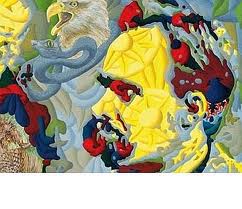
Goldin+Senneby - Standard Length of a Miracle
27.1–15.5 2016 Standard Length of a Miracle is a mutating retrospective by Goldin+Senneby. Over the past ten years, the Stockholm-based artist duo has explored virtual worlds, offshore companies, withdrawal strategies, and subversive speculation. In a unique and subtle way, they combine artistic practice, financial theory, and performative methods, which are sometimes borrowed from the world of magic. The retrospective will be presented as installations and performances at Tensta konsthall as well as at other places not primarily associated with contemporary art. Stockholm School of Economics, the Third Swedish National Pension Fund, the Financial Supervisory Authority, the clothing store A Day's March, Cirkus Cirkör, and the historical art museum Prince Eugen’s Waldemarsudde all serve as stages for reactivations of Goldin+Senneby’s oeuvre from the past ten years. Introducing the artistic field to public institutions and commercial centers enables a shift of perspective about where art takes place and who the audience is.
On view at Tensta konsthall is a new work developed in collaboration with the writer Jonas Hassen Khemiri. Khemiri’s meta-fictional response to Goldin+Senneby’s ten-year practice will be read out loud at the konsthall every day at 14.12. In the short story The Standard Length of a Miracle, the narrator changes his name to Anders Reuterswärd, hoping to increase his chances of getting hired at a konsthall. At a brisk pace without punctures or breathing space, the reader gets thrown into a stream of consciousness where all associations are equally important. The short story’s monologue is connected to the installation of an oak in the gallery space. The oak will function as a meeting place for discussions and seminars during the exhibition period, and, as the carpenter Moa Ott takes on the tree, new furniture will be produced around it. The tree refers to an oak that occurs in Khemiri’s text and also to the surrealist George Bataille’s secret society Acépahle, which is said to have gathered around an oak tree in the late 1930s. Acéphale—Greek for headless—has long been of interest to the artist duo and figures in their multi-year project Headless. Khemiri’s short story was published 10.1 in Dagens Nyheter. Link to the novel.
Economic and financial structures govern our lives increasingly. But, for most people, terms such as repo rates, tax havens, and derivatives are abstract and difficult to grasp. The artistic practice of Goldin+Senneby masters economic strategies and thus punctures the idea that this kind of knowledge is too complex to acquire. Instead of rejecting the financial sector, the artist duo borrows market-inspired methods in order to infiltrate and illuminate the consequences of our late capitalist system and its neoliberal approach. The retrospective highlights the precarious labor market of our time, the increased commercialization of the art world, and the new all-time highs and stock market crashes within financial economics.
Standard Length of a Miracle is a mutating retrospective, meaning it will appear in different forms in different cities. The first, in Stockholm, activates Goldin+Senneby’s history thorough connections between their works and various institutions and activities in the city. Additional mutations are scheduled for Brisbane, Paris, and New York.
On view at Tensta konsthall is a new work developed in collaboration with the writer Jonas Hassen Khemiri. Khemiri’s meta-fictional response to Goldin+Senneby’s ten-year practice will be read out loud at the konsthall every day at 14.12. In the short story The Standard Length of a Miracle, the narrator changes his name to Anders Reuterswärd, hoping to increase his chances of getting hired at a konsthall. At a brisk pace without punctures or breathing space, the reader gets thrown into a stream of consciousness where all associations are equally important. The short story’s monologue is connected to the installation of an oak in the gallery space. The oak will function as a meeting place for discussions and seminars during the exhibition period, and, as the carpenter Moa Ott takes on the tree, new furniture will be produced around it. The tree refers to an oak that occurs in Khemiri’s text and also to the surrealist George Bataille’s secret society Acépahle, which is said to have gathered around an oak tree in the late 1930s. Acéphale—Greek for headless—has long been of interest to the artist duo and figures in their multi-year project Headless. Khemiri’s short story was published 10.1 in Dagens Nyheter. Link to the novel.
Economic and financial structures govern our lives increasingly. But, for most people, terms such as repo rates, tax havens, and derivatives are abstract and difficult to grasp. The artistic practice of Goldin+Senneby masters economic strategies and thus punctures the idea that this kind of knowledge is too complex to acquire. Instead of rejecting the financial sector, the artist duo borrows market-inspired methods in order to infiltrate and illuminate the consequences of our late capitalist system and its neoliberal approach. The retrospective highlights the precarious labor market of our time, the increased commercialization of the art world, and the new all-time highs and stock market crashes within financial economics.
Standard Length of a Miracle is a mutating retrospective, meaning it will appear in different forms in different cities. The first, in Stockholm, activates Goldin+Senneby’s history thorough connections between their works and various institutions and activities in the city. Additional mutations are scheduled for Brisbane, Paris, and New York.
Headless
What do a fishy offshore company, secret artists, a ghost writer and French philosophy have in common? No connections are inconceivable in the recently published thriller Headless. The novel is published by Tensta konsthall, Triple Canopy (New York) and Sternberg Press (Berlin) and forms the final phase in a nine year-long performance on state sovereignty, surveillance and strategies for withdrawal, initiated by the artist duo Goldin+Senneby.
Headless captures the reader with a delirious flight through the slippery corridors of offshore business, seen through the eyes of the British ghost writer, John Barlow. He goes out to find an elitist, Bataille-inspired secret society in the Bahamas/…/, obsessed with sacrifices. The society seems capable of anything in order to retain its power and position.
Clandestine money transfers to exotic islands is a highly debated phenomenon. Terms like "tax havens" and "offshore" are also widely known, both connoting faraway dreamy places in tropical settings. A utopia for savvy swindlers. But what if this model of thought is instead applied to a different kind of island life, picturing withdrawal as a strategy. This is something the philosopher and writer Georges Bataille suggested already in the 1930s.
The Swedish release of Headless took place at a secret location in Stockholm on the 20th of May. The release included a conversation between Mara Lee, author of e g. the novel, Future Perfect and the thesis, När andra skriver (2014) and Rasmus Fleischer, historian and researcher (Stockholm University), appearing as one of the characters in Headless. The conversation was moderated by Maria Lind, director of Tensta konsthall.
Headless is a sneak peak of Goldin+Senneby's retrospective at Tensta konsthall, scheduled for February–May 2016.
Past Headless releases:
4.9, Salt Beyoğlu, Istanbul.
Respondents: Ismail Ertürk (cultural econimist), Övül Durmusoglu (curator), and Kaya Genç (writer). Moderator: Maria Lind.
14.7, Manchester Business School, Manchester.
Respondents: Nikolai Ssorin-Chaikov (social anthropologist), Liz McFall (sociologist), Ed Granter (organisational studies), Peter Folkman (venture capitalist)
Moderator: Ismail Ertürk (cultural economist)
27.6, Miss Read Art Book Fair, Berlin.
Respondents: Hito Steyerl (artist) a.o. Moderator: Caleb Waldorf.
28.5, Librairie Le Monte-en-l'air, Paris.
Respondents: Dominique Gonzalez-Foerster (artist), Emilie Notéris (writer), Christian Chavagneux (economist). Moderator: Sandra Terdjman.
26.5, Open School East, London.
Respondents: Ned Beauman (writer), Angus Cameron (economic geographer), Nicky Marsh (literary scholar). Moderator: Andrea Phillips.
13.5, Triple Canopy, New York.
Respondents: Katie Kitamura (writer), Jill Magid (artist), Joseph O’Neill (writer), Mary Poovey (Professor of English). Moderator Alexander Provan.
2.4, Tranzit, Prague.
Respondent: Fedor Blaščák (philosopher/curator/activist)
1.2, LA Art Book Fair, Los Angeles.
Respondent: Bill Maruer (anthropologist) a.o.
More to be confirmed.
Headless captures the reader with a delirious flight through the slippery corridors of offshore business, seen through the eyes of the British ghost writer, John Barlow. He goes out to find an elitist, Bataille-inspired secret society in the Bahamas/…/, obsessed with sacrifices. The society seems capable of anything in order to retain its power and position.
Clandestine money transfers to exotic islands is a highly debated phenomenon. Terms like "tax havens" and "offshore" are also widely known, both connoting faraway dreamy places in tropical settings. A utopia for savvy swindlers. But what if this model of thought is instead applied to a different kind of island life, picturing withdrawal as a strategy. This is something the philosopher and writer Georges Bataille suggested already in the 1930s.
The Swedish release of Headless took place at a secret location in Stockholm on the 20th of May. The release included a conversation between Mara Lee, author of e g. the novel, Future Perfect and the thesis, När andra skriver (2014) and Rasmus Fleischer, historian and researcher (Stockholm University), appearing as one of the characters in Headless. The conversation was moderated by Maria Lind, director of Tensta konsthall.
Headless is a sneak peak of Goldin+Senneby's retrospective at Tensta konsthall, scheduled for February–May 2016.
Past Headless releases:
4.9, Salt Beyoğlu, Istanbul.
Respondents: Ismail Ertürk (cultural econimist), Övül Durmusoglu (curator), and Kaya Genç (writer). Moderator: Maria Lind.
14.7, Manchester Business School, Manchester.
Respondents: Nikolai Ssorin-Chaikov (social anthropologist), Liz McFall (sociologist), Ed Granter (organisational studies), Peter Folkman (venture capitalist)
Moderator: Ismail Ertürk (cultural economist)
27.6, Miss Read Art Book Fair, Berlin.
Respondents: Hito Steyerl (artist) a.o. Moderator: Caleb Waldorf.
28.5, Librairie Le Monte-en-l'air, Paris.
Respondents: Dominique Gonzalez-Foerster (artist), Emilie Notéris (writer), Christian Chavagneux (economist). Moderator: Sandra Terdjman.
26.5, Open School East, London.
Respondents: Ned Beauman (writer), Angus Cameron (economic geographer), Nicky Marsh (literary scholar). Moderator: Andrea Phillips.
13.5, Triple Canopy, New York.
Respondents: Katie Kitamura (writer), Jill Magid (artist), Joseph O’Neill (writer), Mary Poovey (Professor of English). Moderator Alexander Provan.
2.4, Tranzit, Prague.
Respondent: Fedor Blaščák (philosopher/curator/activist)
1.2, LA Art Book Fair, Los Angeles.
Respondent: Bill Maruer (anthropologist) a.o.
More to be confirmed.